
|
Buyers & Refiners of Gold, Silver, Platinum, Palladium, Dental
& Electronic Scrap 123 Precious Metal Refining, LLC Call Toll Free 1-888-939-0123 Or Text 1-910-431-4316 Call and talk directly with us for Personalized Service. No menus, no buttons to push, no excuses, a real person to answer your important questions. |
|
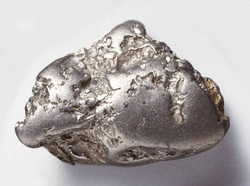
- Platinum is the hardest of the precious metals. It never tarnishes. Its intense luster remains intact over the years and it is completely hypoallergenic. The name originates from the Spanish word platina meaning 'little silver'. Platinum is the rarest of the precious metals.
- Platinum was discovered by astronomers Antonio de Ulloa and Don Jorge Juan y Santacilia in 1735. Charles Wood independently isolated the element in 1741.
- Approximately 8 tons of raw ore must be mined to produce just one pure ounce of platinum. Roughly 90% of all platinum supplies come from South Africa and Russia. Virtually all of the platinum mined in South Africa is pre-sold to industrial users.
- Platinum began being used in jewelry in Europe around the mid nineteenth century. It was not until 1924 that it started to become commonly used. It was very fashionable during the art deco movement.
- Japanese consumers buy approximately 48% of the world's platinum jewelry each year.
- Platinum is closely related to five other metals, palladium, ruthenium, rhodium, osmium, and iridium. Together these six metals are know as the Platinum group metals or PGMs.
- Platinum's supply / demand fundamentals are tight. In fact, if platinum mining were to cease today, above ground reserves would last less than one year. In contrast, gold reserves would last nearly one quarter of a century. In contract with gold and silver, there are no large above-ground platinum stockpiles to fill the gap against significant disruptions.
- Atomic Number - 78
- Melting Point - 3214.9 degrees F. (1768.3 degrees C.)
- Atomic Weight = 195.708
- Number of Neutrons - 117
- Protons/Electrons - 78